
What is the difference between the bid and ask price?
The ask is the price you pay to buy, and the bid is the price you receive when you sell. Preston said it is very important for beginners to understand, because it is the price you actually pay.
Side by side, as Preston put it: the ask is the price sellers are asking for, so it is what a buyer pays. The bid is the price buyers are bidding, so it is what a seller gets.
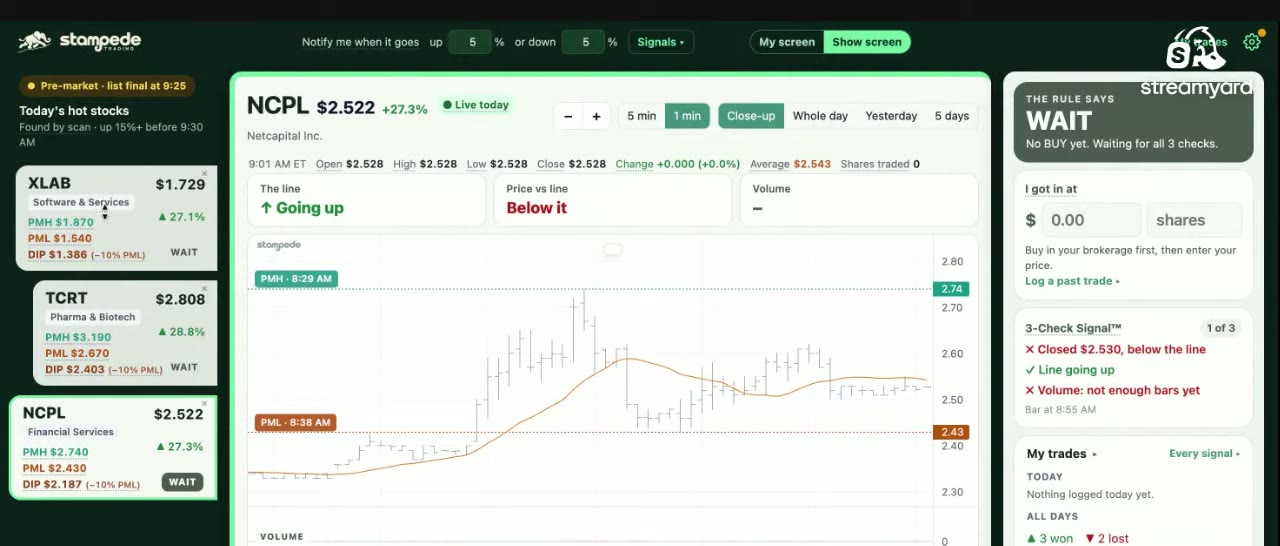
On the practice screen, Preston used one of the early movers as an example. Its ask was $1.74, and he said the bid could be around $1.72.
His tip was to write down your planned price in the morning as an ask price. Then you act when the ask reaches it.
Why do you start a trade slightly down?
You start down because you buy at the higher ask and would sell at the lower bid. That difference is the spread.
Preston's example: buy at $1.74, and if the bid is $1.72, selling right away would show a small loss. He said the spread is there all day, and it is part of how market makers earn money.
The SEC describes the spread as the difference between the purchase price and the sale price. It also notes firms can earn money on it.

Does a market order fill at the price you see?
Not always, because the quote can change before your order fills. Leander said he usually just used market orders and assumed the price shown was the price he would pay.
Preston said many screens show only one price, so it helps to know which side you are looking at. He noted the practice screen does not show the bid and ask side by side today.
The SEC says prices can change quickly in fast moving markets, so you may get a worse price than the current quote. A limit order lets you set the price you are willing to pay.
What is a trading halt, and what happens to bid and ask?
A trading halt is a pause in trading a stock, and Preston said they often come during extreme swings. He described it as a reset button that gives everyone a few minutes to calm down.
He said you can spot one when the price stops flashing, and a stock can be halted more than once in a day.
During a halt, he said, the bid and ask can sit far apart, such as $1.78 against $2.40. He watches the middle of the two to plan before trading resumes.
Why can't you buy some stocks at your broker?
Some brokers limit online buying in certain volatile stocks, so check before you plan the trade. Preston said some only take those orders by phone.
He said a stock on the list may not be buyable at every broker on a given day. Anyone who tried to buy it online there could not place the order.
His advice was to confirm you can trade a stock on your platform ahead of time. If you cannot, you would need another way to place the order.
Are Fridays busier in the stock market?
Preston said Fridays tend to bring more activity than other days. He linked it to options expiring on Fridays, which can move prices as traders fill their orders.
The hosts saved the details for a later, more advanced show. This recap is education only and not financial advice.
Your move
In a practice account, look up one stock's bid and ask, write down the spread, and place a limit order at the ask.
Terms used
Plan a trade with our free position size calculator or gap and risk/reward calculator.
Sources
Show recap · October 20, 2026